
Rwenzori Mountain National Park (all you need to know)
Rwenzori Mountain National Park , the Mountain Rwenzori National Park is situated in the southwestern part of Uganda and is recognized as a UNESCO world heritage site. Rwenzori National Park is situated on the eastern side of the western Albertine Rift Valley, spanning the border between Uganda and the Democratic Republic of Congo. The Mount Rwenzori National Park is a long-established protected area situated at high altitudes. It encompasses a significant chunk of the central and eastern parts of the Rwenzori mountain range. The park spans an area of 996 square kilometers and extends across the districts of Kabarole, Kasese, and Bundibugyo. Similar to Mount Elgon National Park, the park also features a mountain, distinguishing it from other National Parks in Uganda.
Rwenzori National Park
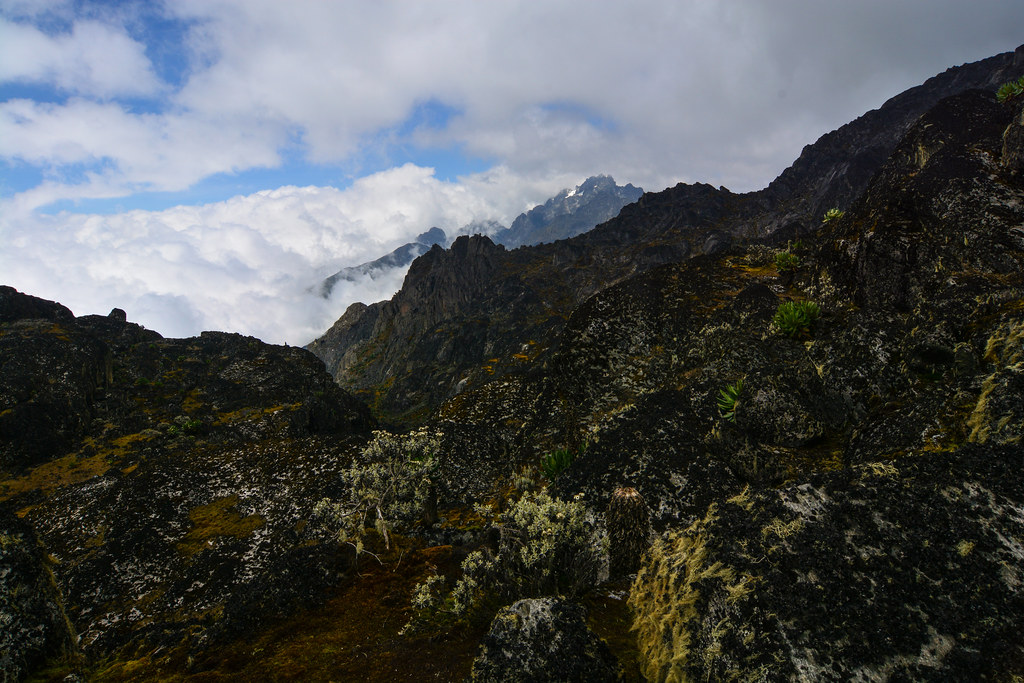
The Mountain Rwenzori, also known as the “Mountain of the Moon,” is the third tallest mountain in Africa, reaching an elevation of 16,700 feet above sea level. This majestic mountain is characterized by its snow-capped peaks and glaciers, which serve as important water sources for the Nile River, the longest river in the world. The Rwenzori Mountain range consists of stunning peaks that are ideal for mountain climbing. These summits include Margherita peak, which is the highest, as well as Mount Speke, Mount Baker, Mount Stanley, Mount Emin Pasha, and Mount Luigi da Savoia. The mountain known as “Cloud Mountains,” named by Henry Morton Stanley due to its distinctive and picturesque peaks, is the primary draw for tourists visiting Rwenzori National Park. Its breathtaking views and diverse natural systems make it a key destination. The Mountain Rwenzori is renowned as one of the most captivating Alpine regions globally. It boasts a diverse and stunning array of flora at various elevations, including distinctive highland vegetation adorned with remarkable features like glaciers, snowfields, and waterfalls.
The Mountain Rwenzori National Park is renowned for its exceptional botany, characterized by varied flora zones such as moorland, bamboo, vibrant mosses, towering tree-heathers, and lush montane forest. These vegetation zones cover the slopes of the mountain at varying altitudes. Additionally, there exist colossal variations of Senecio and lobelia, which are exceedingly uncommon plant species found alone in the East African mountains at altitudes exceeding 3800 meters.
The establishment of Mountain Rwenzori National Park as a national park in 1991 aimed to protect its distinct ecological system from increasing human activities. Due to its exceptional natural beauty, the park was designated as a UNESCO World Heritage site in 1994. Subsequently, the park was included on UNESCO’s roster of endangered world heritage sites from 1999 to 2004 due to the presence of rebels who utilized the dense forests as a hiding place, leading to a state of insecurity.
Attractions in mountain Rwenzori national park
Mountain wildlife: The Rwenzori National Park harbors a diverse range of animals, including 70 different mammal species. Within the park’s dense vegetation, there are six species that are exclusive to the Albertine Rift, three rare species, and four species that are only found in the Rwenzori Mountains. The creatures in this list comprise elephants, chimpanzees, Rwenzori otters, leopards, duikers, hyrax bushbucks, and other primates such as Angola black and white colobus, blue monkeys, and l’hoests monkeys. Additionally, there are uncommon reptiles, such as the three-horned chameleon, which are not frequently observed due to the deep vegetation of the forest.
Bird species: Alpine Rwenzori National Park is a haven for birds and a significant area for birdwatching, hosting around 217 different bird species. Many of these species are unique to the Albertine Rift region, with 17 of them being exclusive to the park. These birds are primarily found in the forested areas of the park. The bird species found in this area include the Rwenzori Turaco, Barred Long-tailed Cuckoo, Long-eared Owl, Handsome Francolin, Cinnamon-chested Bee-eater, Archers’ Robin-chat, White-starred Robin, Rwenzori Batis, Montane Sooty Boubou, Lagden’s Bush-Shrike, Slender-billed Starling, Blue-headed Sunbird, Golden-winged Sunbird, Strange Weaver, as well as various species of Barbets, Greenbul, Apalises, IIladopsis, Flycatchers, and Crimson wings, among others.
The Rwenzori mountain range, located just a few miles from the equator, is home to six snowcapped peaks that are perpetually covered in snow and glaciers. Among these peaks, the most popular for hikers are Mount Stanley, the highest at an elevation of 5,109 meters, Mount Speke at 4,890 meters, and Baker at 4,843 meters.Other notable summits are Mount Emin Pasha and Mount Luigi da Savoia.
Bulemba Bulemba houses: Bulemba Bulemba houses in Mount Rwenzori National Park serve as historical sites that preserve the remains of the first king of Rwenzururu kingdom and other significant historical leaders. Among these leaders, Isaiah Mukirania Kibanzanga is the most prominent, recognized and valued for his endeavors in protecting the Nakonzo tribe from the oppressive rule of the Batooro. This website serves as the gathering place for the bakonzo people who get together every year on September 2nd to participate in a pilgrimage to honor the memory of their esteemed king.
The glacier-carved valleys of Rwenzori Mountain are home to a diverse range of peculiar plant life, including triffid-sized variations of uncommon lobelia, heather, groundsel, crish, gnarled trees, and colored mosses. These unique plants are considered to be among of the most valuable botanical treasures in the world, and they only grow on the tallest mountains in East Africa.
The Rwenzori Mountain National Park, under the management of the Uganda Wildlife Authority, is an enthralling tourist spot that provides a variety of captivating safari experiences, including
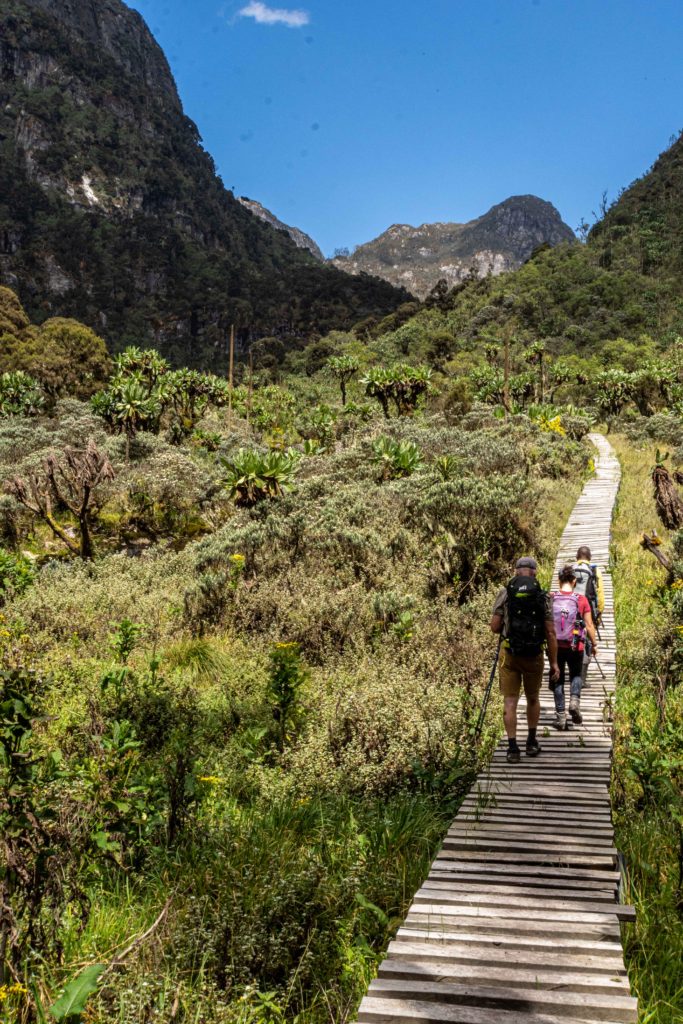
Mountain climbing or hiking: Mountain Rwenzori National Park is renowned as the premier hiking destination in Uganda. The park offers thrilling climbing opportunities on the majestic Rwenzori mountain, which boasts six magnificent summits. Along the way, hikers are treated to captivating lakes, lush flora, and diverse wildlife encounters. While trekking on Rwenzori Mountain, you will traverse two clearly marked paths that will guide you to the park’s distinctive enigmas. The specific trails you will follow are:
The Kilembe trail starts at the southern slopes of Rwenzori Mountain near Kilembe, close to Kasese town. This route passes through glacial lakes in the mountain and the Nyamwamba valley, eventually joining the core circuit at Lake Kitandara.
Exploring Rwenzori Mountain is a highly gratifying experience, as it allows you to appreciate the captivating panoramic vistas of the summits, the lush flora, and the surrounding environment. When preparing for a hiking vacation, it is crucial to consider that the most enjoyable experience is typically found during the dry months of July-August and November to February, when the trails are less muddy. To ensure a remarkable trekking experience, it is imperative to acquire basic hiking gear such as
An attendant to transport your luggage
A hiking stick is a long, sturdy pole and is used for support and balance during trekking, A cartographic representation, Revitalizing aqua, Trekking footwear, Medical emergency, kit, Water-resistant garments, such as jackets and long-sleeved shirts Mountain hiking Rwenzori is managed and overseen by Rwenzori Mountain Service (RMS), an institution that collaborates with the Ugandan Wildlife Authority.
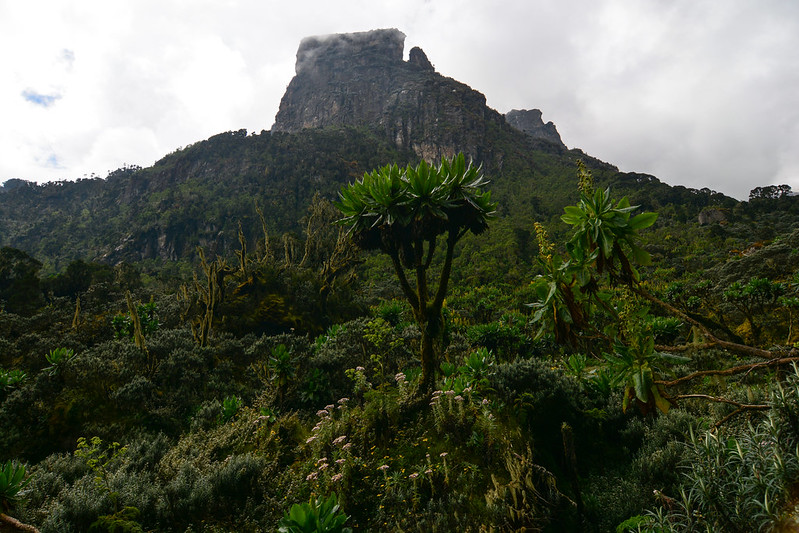
Nature walks in Rwenzori National Park offer tourists the opportunity to explore the park’s stunning attractions, including Mahoma. These walks often occur in Kilembe and the central circuit, which are also popular routes for mountain climbing. The park offers nature walks that guide tourists through many attractions, including the Buraro chimp forest, Karangura ridge, and the indigenous towns of Kichwamba. Additionally, adventurous tourists have the option to travel to Bundibugyo by traversing the bwamba pass. During nature walks, tourists have the chance to come across the Mobuku River, breathtaking snow-capped mountains, and a diverse range of wildlife including elephants, vervet monkeys, and various bird species such as the Barred Long-tailed Cuckoo, Long-eared Owl, Handsome Francolin, Cinnamon-chested Bee-eater, Archers’ Robin-chat, White-starred Robin, and Rwenzori Batis.
Mountain birdwatching Rwenzori National Park is a haven for birds, with a diverse array of bird species. Within its dense forests, one may observe several species like bee-eaters, robins, sunbirds, and barbets. Notable sightings include the Rwenzori Turaco, long-eared owl, bearded vulture, swifts, and black eagles.
Hiking Rwenzori Mountain National Park on foot
Cultural encounters: Mountain Rwenzori National Park is inhabited by various indigenous ethnic groups residing in the surrounding areas. These tribes include the Bakonjo, Bakonzo, and Bamba peoples, who regularly showcase their traditional way of life. During a safari in these areas, visitors can explore many paths, including the Bulemba-Ihandiro Cultural Trail. This trail offers the opportunity to witness and engage with local traditions such as the practices of the traditional healer Muhima, blacksmithing, basket weaving, traditional fire making, and the scenic Kamusonge river. Visitors can explore the traditional Konzo museum, which features exhibits on Rwenzururu culture, including their history, royal regalia, and cultural practices such as attire and handicrafts.
The Rwenzori Mountain National Park is located 437 kilometers away from Kampala, the capital city of Uganda. It may be entered through two main entry points: Nyakalengija Central Circuit and Kilembe Trail in Kasese. Both air and road transportation can be utilized to reach the park, with the road option being Kampala via Fort Portal road. Chartered flights are available from Kajjasi Airstrip and Entebbe International Airport to Kasese Airstrip for air travel.